Trusted Aluminum Casting Manufacturers: Your Guide to High-Quality Aluminum Castings
Aluminum Alloy Casting: Processes, Benefits, and Industrial Applications
Aluminum casting is a critical process in modern manufacturing, employing multiple methods such as die casting and sand casting. Every technique provides distinct benefits, supporting the manufacturing of complex view this guide parts with exactness. The material's low density and anti-corrosive characteristics enhances its value across many industries. Yet, the entire breadth of its applications and the latest advancements in casting technologies remain to be discovered, revealing a continuously changing environment in aluminum manufacturing.
Diverse Aluminum Casting Processes: Sand to Die Casting
Aluminum casting encompasses multiple techniques, each suited for different applications and requirements. One widely-used method is sand casting, where a mold is formed using sand and resin, enabling intricate designs and large parts. Another technique, shell molding, employs a thin shell of sand that delivers a smoother finish and enhanced dimensional accuracy. Die casting, a process that uses high pressure to inject molten aluminum into a metal mold, is well-suited for high-volume production and offers excellent surface finish and detail. Moreover, investment casting, which uses a wax pattern coated with ceramic, allows the production of complex shapes with tight tolerances. Last but not least, gravity casting depends on gravity to fill the mold, ideal for larger components but less precise than die casting. Each method has specific advantages, making them appropriate for varying industrial needs and product specifications.
Primary Advantages of Aluminum Casting for Production
While multiple manufacturing processes are present, aluminum casting excels as a result of its numerous advantages. One major benefit is its potential to create complex shapes with high dimensional accuracy, limiting the need for extensive machining. This efficiency translates to reduced production time and lower costs. Moreover, aluminum's lightweight nature delivers an advantage in industries seeking to enhance fuel efficiency and reduce overall mass in products.
Aluminum's exceptional corrosion resistance improves the durability of cast components, making them appropriate for various environments. Furthermore, aluminum casting enables a range of surface finishes, presenting aesthetic options for manufacturers. The material's recyclability also contributes to sustainability, meeting modern manufacturing requirements for eco-friendly practices. Finally, the wide availability of aluminum alloys ensures that manufacturers can choose materials tailored to specific performance requirements, enhancing the versatility of aluminum casting in addressing diverse manufacturing applications.
Aluminum Casting: Primary Industrial Applications and Uses
When considering industrial applications, aluminum casting becomes indispensable across numerous sectors thanks to its unique properties. In the automotive industry, aluminum castings are extensively used for engine blocks, transmission cases, and numerous structural components, enabling vehicle lightweighting and fuel efficiency. The aerospace sector also benefits from aluminum casting, where components including aircraft frames and engine parts require materials that combine strength with reduced weight.
Moreover, the electronics industry uses aluminum castings for heat sinks and housings, which successfully remove heat while ensuring durability. In the construction sector, aluminum castings are used for window frames and architectural components, presenting both aesthetic appeal and resilience. Additionally, the manufacturing of consumer goods, such as cookware and appliances, frequently incorporates aluminum casting, showcasing its versatility. All in all, aluminum casting plays a critical role in advancing performance and innovation across various industries.
Latest Developments in Aluminum Casting Approaches
Modern innovations in aluminum casting techniques have considerably boosted the performance and quality of production across diverse industries. Remarkably, innovations such as 3D printing and computer-aided design (CAD) have permitted manufacturers to create sophisticated geometries that were previously problematic to achieve. These technologies promote rapid prototyping and decrease lead times, permitting more flexible production processes.
Moreover, developments in alloy composition have enhanced the mechanical properties of cast aluminum, leading to lighter and stronger components. Methods like high-pressure die casting and vacuum casting have also developed, reducing porosity and enhancing surface finish.
The integration of smart manufacturing technologies, including IoT and automation, has enhanced production schedules and reduced waste. Advanced thermal management methods have enabled better temperature control during casting, further enhancing dimensional accuracy. Combined, these developments not only boost product quality but also contribute to more sustainable manufacturing processes in the aluminum casting industry.
Environmental Impact of Aluminum Casting: Sustainability and Recycling
With the evolution of the aluminum casting industry, its environmental impact grows more substantial, driving a greater emphasis on sustainability and recycling practices. The production of aluminum is energy-intensive, often leading to substantial greenhouse gas emissions. To counter these effects, many companies are embracing more sustainable methods, such as utilizing renewable energy sources and optimizing energy efficiency in their operations.
Aluminum recycling is especially beneficial, as it consumes only 5% of the energy needed for primary production. This not only decreases emissions but also preserves natural resources. The introduction of closed-loop recycling systems further cuts down on waste and facilitates the reuse of materials.
Furthermore, progress in casting technology are leading to the creation of eco-friendly alloys that reduce environmental consequences. As stakeholders continually prioritize environmentally responsible practices, the aluminum casting industry is ready to play a significant role in fostering environmental stewardship while meeting the demands of modern manufacturing.
Common Questions
Which Types of Alloys Are Applied in Aluminum Casting?
Multiple aluminum alloys are applied in casting, including 2xx.x, 3xx.x, 4xx.x, 5xx.x, and 7xx.x series. Each alloy delivers distinct properties, making them ideal for varied applications and enhancing performance in distinct environments.
In What Ways Does Temperature Influence Aluminum Casting Operations?
Heat levels substantially impact aluminum casting processes by impacting fluidity, solidification rates, and mechanical properties. Increased heat levels boost fluidity for elaborate structures, while reduced temperatures can result in faster cooling, altering the final product's strength and integrity.
Is Aluminum Casting Possible at Home?
Home-based aluminum casting is possible with proper equipment and safety precautions. Practitioners commonly employ small-scale furnaces and molds, yet must comply with safety procedures to control elevated temperatures and melted metal management properly.
What Safety Steps Should Be Taken During Aluminum Casting?
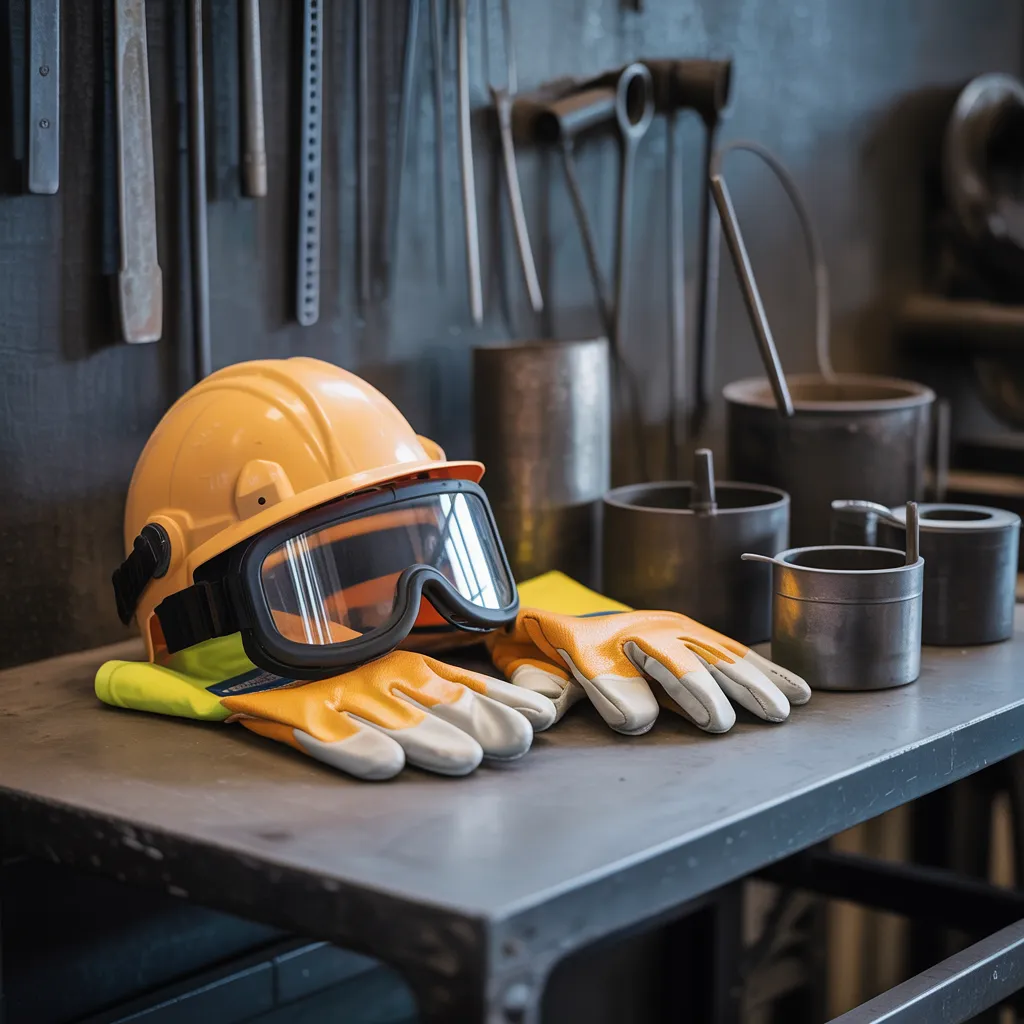
Essential safety protocols during aluminum casting include using protective gear, such as gloves and goggles, guaranteeing adequate ventilation, using heat-resistant surfaces, and keeping flammable materials away from the workspace to stop accidents and injuries.
What's the Expected Timeline for the Aluminum Casting Process?
The aluminum casting procedure generally requires between several hours and a few days, determined by elements like the intricacy of the mold, the process employed, and the necessary cooling duration for the cast aluminum.